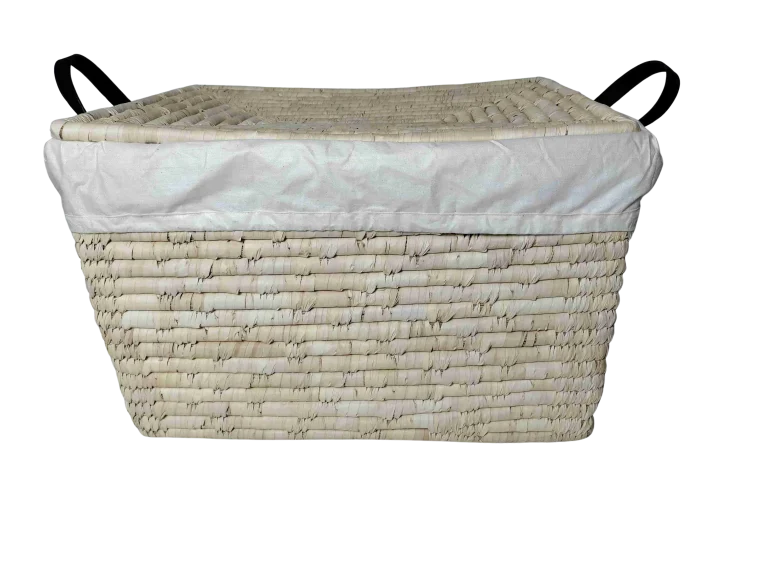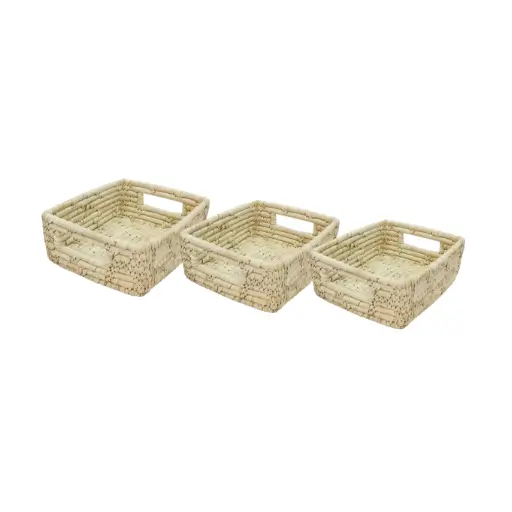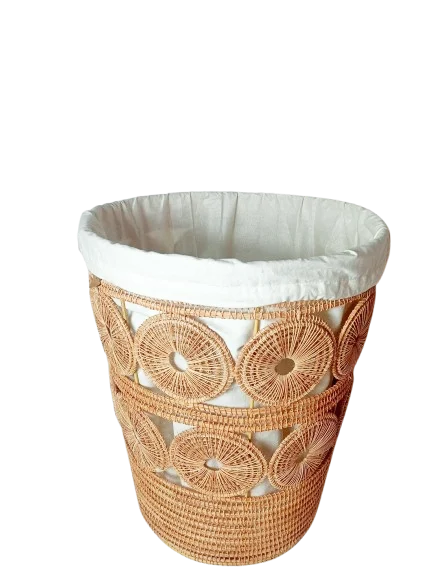
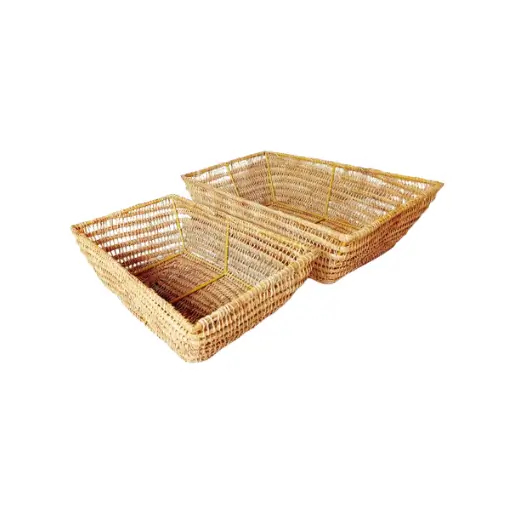
Choosing the right fibre is the single biggest decision when you design a basket range. It affects the look, how long the product lasts, how it ships, and the final price on your shelf.
Table of Contents
Quick Comparison
| Fibre | Look | Strength | Best for |
|---|---|---|---|
| Jute | Warm, golden, rustic | Good | Storage baskets, rugs, plant covers |
| Seagrass | Green-to-straw, slight sheen | Very good | Hampers, belly baskets, trays |
| Water hyacinth | Soft, chunky, natural | Good | Storage boxes, poufs, round baskets |
| Rattan / cane | Fine, refined weave | Excellent | Trays, lantern shades, fruit baskets |
Jute: The Golden Fibre
Jute is spun into rope and braids, then coiled and stitched into shape. It takes natural dyes well, so it is ideal when you want colour stripes or two-tone designs.
Seagrass: Tough and Water-Resistant
Harvested from coastal wetlands and twisted into cord, seagrass is naturally sturdy and copes well with humidity, which makes it a favourite for laundry and bathroom storage.
Water Hyacinth: Soft and Sustainable
Water hyacinth is a fast-growing aquatic plant that clogs rivers. Turning it into baskets helps keep waterways clear and gives a soft, chunky texture customers love.
Rattan and Sylhet Cane: Light but Strong
Cane is steamed and bent into frames while its peel is woven into fine patterns. It is the best choice for pieces that need a rigid shape, such as trays and lantern shades.
How to Choose
- Heavy daily use: seagrass or rattan.
- Soft, cosy look: water hyacinth.
- Colour and pattern: jute.
- Lowest price per piece: jute or seagrass.
Frequently Asked Questions
Which basket fibre lasts the longest?
Rattan and seagrass are the most durable for everyday use; jute and water hyacinth last for years indoors when kept dry.
Can natural fibres be dyed?
Yes. Jute takes dye best; seagrass and water hyacinth can be dyed or bleached for lighter tones.
Can I mix fibres in one product?
Yes. Jute with seagrass, or a rattan frame with a water hyacinth weave, are common combinations.
Conclusion
There is no single best fibre, only the right one for your product. See every material on our Materials page, or request our latest catalogue.